Pain that will not go away deserves a specialist, not another round of painkillers. At the NeuroSpine & Pain Center in Coconut Grove, Dr. Lucien Alexandre treats chronic and acute pain with a plan built around what is actually causing it, whether that is a nerve, a joint, a disc or a muscle.
He is triple board certified in Neurology, Pain Medicine and Headache Medicine, which means the doctor diagnosing your pain is also the one treating it. Most patients are seen within the week. Call 786-882-3108 or book online.
Dr. Alexandre's expertise in interventional pain management in Miami ensures that patients receive the most advanced and effective treatments available.
Regain control over your life and look toward a future with less suffering with the help of Dr. Alexandre.
What is pain management?
Pain management is a multidisciplinary approach to relieving and controlling pain in individuals who are experiencing discomfort, whether it's acute (short-term) or chronic (long-lasting) pain.
The primary goal of pain management is to enhance the patient’s quality of life by reducing pain and its associated physical, emotional, and psychological impacts.
Pain, when left untreated or poorly managed, can have a debilitating impact on an individual's quality of life. Untreated pain can lead to physical limitations, emotional distress, and social isolation.
So, effective pain management not only relieves suffering but also promotes overall well-being.
How does pain management in Miami work?
Dr. Alexandre assesses a patient's pain through a combination of techniques and tools to understand the nature, severity, and impact of the pain.
A thorough assessment is essential for effective pain management. Here's what typically happens during a consultation in a Miami pain clinic.
1. Assessment
The first step in pain management is a thorough assessment of the patient's pain. This includes determining the type, location, and intensity of the pain and its impact on the patient's daily life and emotional well-being.
The assessment often involves a patient interview, medical history review, physical examination, and, in some cases, diagnostic tests.
2. Diagnosis
Identifying the underlying cause of the pain is essential. This may involve reviewing medical records, diagnostic imaging (X-rays, MRI, CT scans), and other tests to pinpoint the source of the pain.
For some types of pain, like neuropathic pain or headaches, the diagnosis may be more complex.
3. Treatment planning
Your Miami pain management medical team will then develop a pain management plan based on the assessment and diagnosis. This plan is highly individualized and considers the patient's specific needs, medical history, and the type of pain they are experiencing.
4. Medication management
Medications are often a vital component of a Miami pain clinic’s pain management treatment plan. The choice of medication depends on the type and severity of the pain. Medication management also involves determining the right dosage and monitoring for side effects.
5. Interventional procedures
Minimally invasive procedures, such as nerve blocks, epidural injections, and radiofrequency ablation, are used to target the source of pain more directly. These procedures can provide longer-lasting pain relief.
6. Lifestyle modifications
Lifestyle changes, including diet and exercise, are often recommended to improve overall health and reduce pain. For example, an anti-inflammatory diet may help with chronic pain.
7. Ongoing monitoring
Pain management is an ongoing process. Your pain doctor in Miami will regularly monitor you to assess the effectiveness of the treatment plan and make any necessary adjustments. It's essential to ensure that pain management remains appropriate as the patient's condition changes.
That’s why it’s also important to choose the best pain management doctor in Miami, like Dr. Lucien Alexandre. He is not just a medical professional but also a partner in each patient's journey to better health.
With his extensive qualifications and a caring heart, he strives to alleviate pain, improve function, and enhance overall well-being.
What are the different pain management techniques?
Miami pain management encompasses a wide range of techniques and strategies aimed at alleviating or controlling pain. The choice of method often depends on the type, severity, and underlying cause of the pain. Here are the different pain management techniques:
1. Medication management
Pain management in Miami often involves the use of medications, such as:
- Nonsteroidal anti-inflammatory drugs (NSAIDs): These drugs, like ibuprofen and aspirin, reduce pain and inflammation.
- Muscle relaxants: Used for muscle-related pain and spasms.
- Antidepressants: Certain antidepressants, like tricyclics and SNRIs, are effective in managing neuropathic pain.
- Anticonvulsants: Drugs like gabapentin and pregabalin can help alleviate neuropathic pain.
2. Non-pharmacological approaches
These approaches focus on reducing pain without the use of medication. Common non-drug approaches include:
- Physical therapy: Exercises and rehabilitation to improve function and reduce pain, often for musculoskeletal conditions.
- Heat and cold therapy: The application of heat or cold can reduce inflammation and provide relief.
3. Lifestyle modifications
Lifestyle changes can have a significant impact on pain management. This may include dietary changes, sleep management, and stress reduction.
4. Interventional procedures
A pain management doctor in Miami also utilizes interventional techniques to address various causes of pain. It is typically used to provide adequate pain relief or if the cause of pain can be targeted more directly.
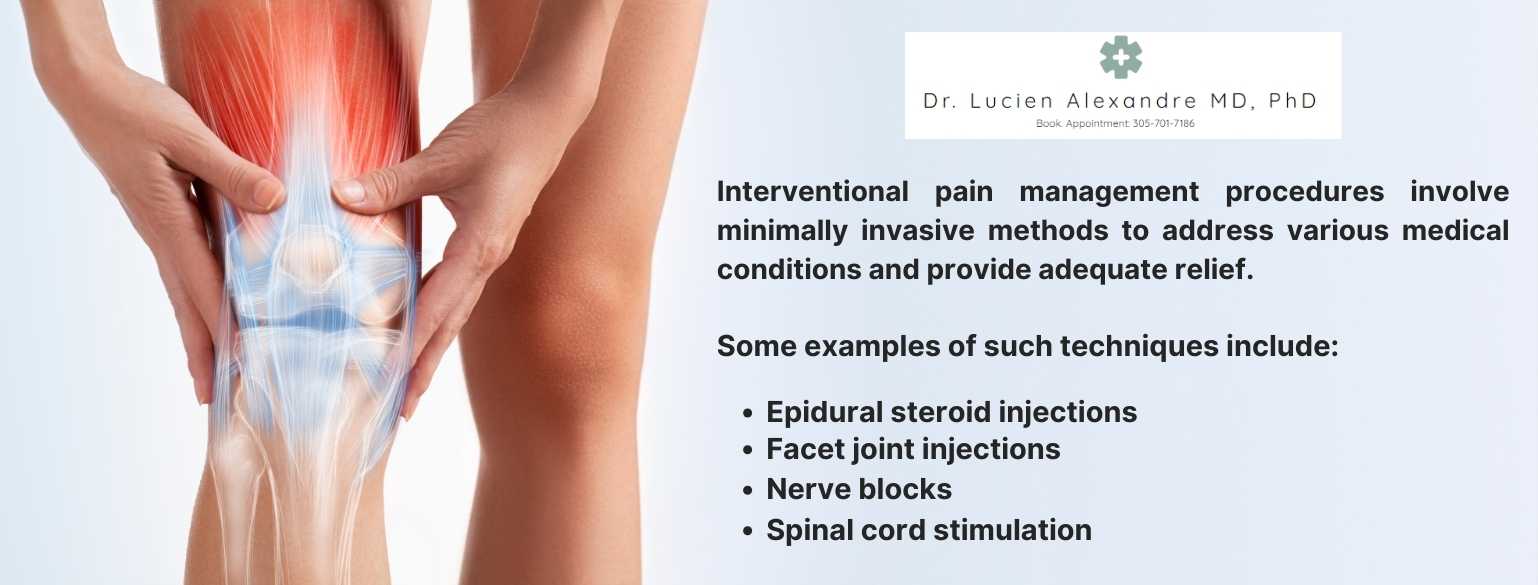
Interventional procedures involve minimally invasive methods to address various medical conditions, such as
chronic back pain, joint pain, spinal disorders,
osteoarthritis, tendinitis, and more. Some examples include:
- Epidural steroid injection: ESI involves injecting a combination of corticosteroid and local anesthetic into the epidural space of the spine to reduce inflammation and provide pain relief. It is commonly used for back and leg pain due to conditions like herniated discs or spinal stenosis.
- Facet joint injections: Facet joints are located in the spine and can be a source of pain, especially in conditions like facet joint arthritis. These injections deliver a local anesthetic and corticosteroid directly into the affected joint.
- Nerve blocks: Nerve blocks are used to target specific nerves that are transmitting pain signals. Examples include:
- Radiofrequency ablation: RFA disrupts the function of specific nerves responsible for transmitting pain signals. It can provide longer-lasting pain relief and is commonly used for conditions like chronic back pain or facet joint pain.
- Spinal cord stimulation: This procedure involves implanting a device that delivers electrical impulses to the spinal cord to interfere with pain signals. It is often used for chronic neuropathic pain.
- Kyphoplasty and vertebroplasty: These procedures are used to treat painful vertebral compression fractures by injecting cement into the affected vertebrae to stabilize them.
Conditions we treat
- Chronic back and neck pain
- Sciatica and lumbar radiculopathy
- Joint pain and arthritis
- Muscle and myofascial pain
- Migraines and chronic headaches
- Complex regional pain syndrome
- Abdominal and pelvic pain
- Post-surgical pain
Where to find the best pain management near me?
In a world where expertise, compassion, and dedication come together, Dr. Lucien Alexandre, MD truly stands out as a beacon of hope and healing.
With his triple board certification, pioneering spirit, and patient-centered approach, he is an exceptional resource for anyone seeking relief from pain or neurological conditions.
If you are looking for a pain specialist who will take the time to find the cause, book a consultation with Dr. Alexandre. He has dedicated his career to pioneering innovative approaches that enhance the quality of life for those living with pain.
Your journey to improved well-being starts here. Contact our pain clinic in Miami to schedule a consultation with the best interventional pain management specialist.
Frequently asked questions
Do I need a referral to see a pain management specialist?
Most patients can book directly with us. Some insurance plans require a referral from your primary care doctor, so it is worth checking your plan before your visit. Our team can help you confirm.
What happens at a first pain management appointment?
Dr. Alexandre reviews your history and any imaging you have, examines you, and explains what he thinks is causing the pain. You leave with a plan, which may include medication, an injection, physical therapy or a regenerative option.
Will I be put on opioids?
Not as a default. The goal is to treat the source of the pain with targeted procedures and regenerative approaches so you need as little medication as possible.
How soon can I be seen?
Most new patients are seen within the week. Call 786-882-3108 for the next available appointment.
The material contained on this site is for informational purposes only and DOES NOT CONSTITUTE THE PROVIDING OF MEDICAL ADVICE, and is not intended to be a substitute for independent professional medical judgment, advice, diagnosis, or treatment. Always seek the advice of your physician or other qualified healthcare providers with any questions or concerns you may have regarding your health.