If you have ever experienced shooting pain down your leg, you may have suffered from sciatica. This intense and debilitating condition affects a lot of people with 1% to 5% annual incidence. But what exactly is sciatica, how can it be managed, and where can you find the best sciatica pain doctors in Miami?
Look no further as renowned sciatica pain doctor Dr. Lucien Alexandre MD, PhD, shares his extensive knowledge and experience in effectively managing sciatica.
Let’s dive into the causes and symptoms of this standard and often misunderstood condition and its treatment options. Get ready to gain valuable insights and find relief for your sciatica with Dr. Alexandre's expert guidance.
Understanding Sciatica
Sciatica can happen for various reasons, and understanding its causes and symptoms can help you better manage and treat the condition.
A herniated or slipped disc is one of the most common causes of sciatica. This is when the soft cushioning between the vertebrae in the spine bulges out, putting pressure on the sciatic nerve. Other causes include spinal stenosis, spinal canal narrowing, and spondylolisthesis when a vertebrae slips out of place. In rare cases, sciatica can be caused by a tumor or infection.
Pregnant women are also more prone to developing sciatica due to the added pressure on their spine and sciatic nerve. Age and lifestyle factors such as obesity, sedentary lifestyle, and poor posture can also increase the risk of developing sciatica.
The most common symptom of sciatica is pain that radiates from the lower back down to the buttocks and legs. This pain can range from mild to severe and can be described as a burning, shooting, or electric shock-like sensation. It may also be accompanied by tingling, numbness, or weakness in the affected leg.
The pain may worsen with activities such as sitting or standing for too long, coughing, and sneezing. It may also feel worse at night, making it difficult to get a good night's sleep. In some cases, the pain may be bilateral, affecting both legs.
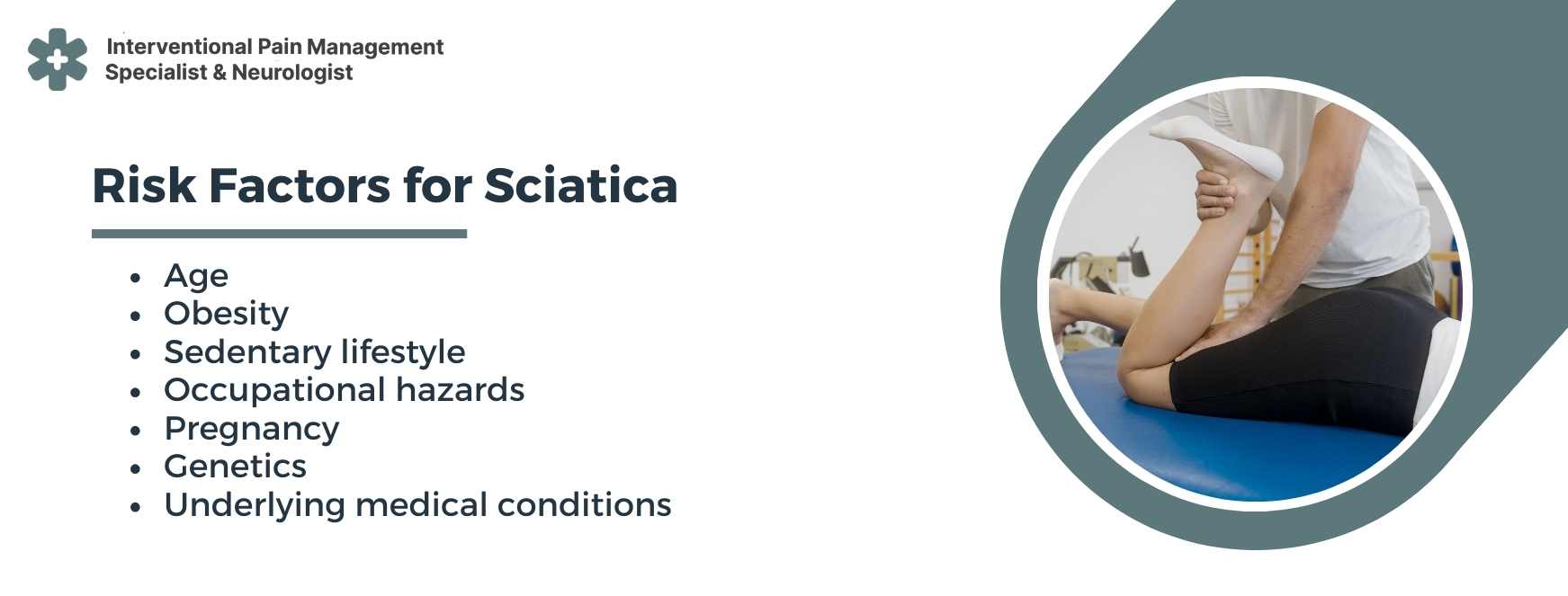
Risk Factors for Sciatica
While sciatica can affect anyone, certain risk factors can increase one's likelihood of developing this condition. Let’s discuss the top risk factors for sciatica.
Our joints become less flexible and more prone to injuries as we age. This can increase the risk of sciatica, as the aging process can cause degeneration of the spine and its surrounding structures. People over 50 are more likely to develop sciatica than younger individuals.
Obesity is a known risk factor for many health conditions, and sciatica is no exception. Excess weight can pressure the spine, leading to sciatic nerve compression. This pressure can cause inflammation and irritation, resulting in sciatic pain.
Sitting for extended periods can also increase the risk of developing sciatica. People with desk jobs or who spend a lot of time sitting in front of a computer are more susceptible to this condition. Sitting too long can pressure the lower back and compress the sciatic nerve.
Certain occupations that require heavy lifting, twisting, or prolonged sitting can increase the risk of developing sciatica. Jobs that involve repetitive motions or high-impact activities can also contribute to this condition.
During pregnancy, women may experience sciatic pain due to the pressure on the nerve from the growing uterus. Hormonal changes can also lead to loosening of the ligaments that support the spine, which causes irritation and inflammation of the sciatic nerve.
Some people may be genetically predisposed to developing sciatica. A family history of the condition can increase the chances of experiencing sciatic pain. This may be due to inherited spinal anatomy differences or the inherent weakness of specific spinal structures.
Underlying medical conditions
Certain medical conditions can also increase the risk of developing sciatica. These include spinal stenosis, degenerative disc disease, and herniated discs. These conditions can compress the sciatic nerve, resulting in pain and discomfort.
Diagnosis and Treatment of Sciatica
Diagnosing and treating this condition can be complex and require a thorough understanding of the underlying causes and symptoms. The diagnostic process for sciatica typically begins with a physical examination, where a healthcare professional will assess the patient's medical history and symptoms and perform various tests, such as checking for strength, sensation, and reflexes in the affected area. This helps to determine the location and severity of the nerve compression.
In addition to the physical exam, imaging tests such as X-rays, MRIs, or CT scans may also be ordered to identify the root cause of the compression. These tests help to visualize the spinal column, nerves, and surrounding tissues, providing a more accurate diagnosis.
How we treat sciatic nerve pain
Sciatica is a symptom, not a diagnosis. The pain running down your leg is a nerve being compressed or irritated somewhere, and treating it properly means finding out where. Dr. Alexandre is a neurologist as well as a pain specialist, which means the nerve itself is his home ground.
Treatment starts conservatively and escalates only if it needs to:
- Targeted medication to calm nerve inflammation, which is different from general painkillers
- Physical therapy aimed at the specific structures compressing the nerve
- Epidural steroid injections, delivered under imaging so the medication reaches the exact level causing the problem
- Selective nerve root blocks, which both relieve pain and confirm which nerve is responsible
- Radiofrequency ablation for pain that keeps returning after injections help temporarily
- Regenerative options, including PRP, where a damaged disc or surrounding tissue is the underlying cause
- Minimally invasive spine procedures, including the Discseel procedure for a leaking or torn disc, when non-surgical care has not been enough
Most patients never need open surgery. The goal is always the least invasive thing that actually solves the problem.
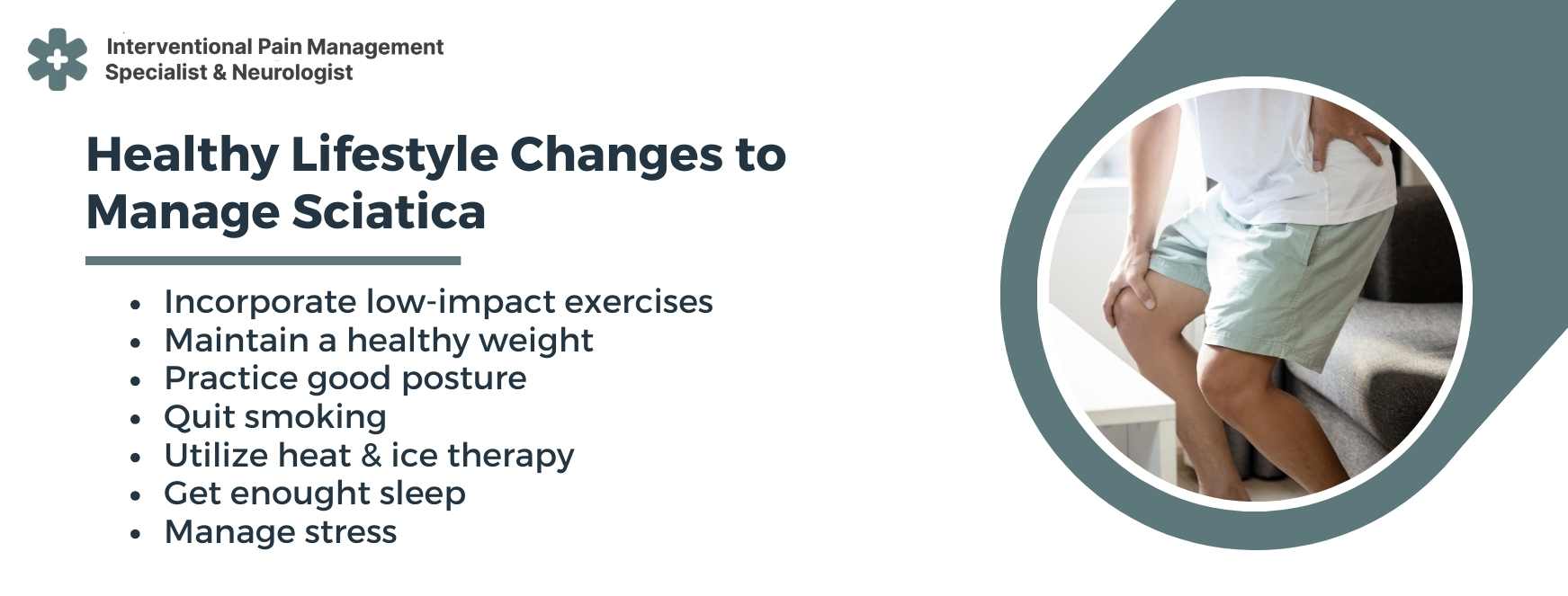
Healthy Lifestyle Changes to Manage Sciatica
Simple changes help: low-impact exercise such as swimming or walking, maintaining a healthy weight, good posture when sitting, not smoking, adequate sleep, and heat or ice for flare-ups. None of these replace treatment when a nerve is genuinely compressed, but they support recovery and reduce the chance of it returning.
Meet Dr. Lucien Alexandre, the Best Doctor for Sciatica Nerve Pain
Meet Dr. Lucien Alexandre, MD, PhD, a trusted
pain management doctor in Miami. Triple board certified in Neurology, Pain Medicine and Headache Medicine, with a PhD in Stem Cell Neurobiology, Dr. Alexandre is dedicated to providing the most advanced and effective treatment options for his patients.
His expertise lies in utilizing state-of-the-art technology to offer
minimally-invasive procedures for sciatica, allowing for quicker recovery times and less postoperative discomfort. Dr. Alexandre's patient-centered approach and commitment to staying up-to-date on the latest advancements in spinal care make him a top choice for those seeking relief from sciatica.
If you’re looking for reliable “sciatica pain doctors near me,” don’t hesitate to contact and
schedule a consultation with Dr. Alexandre today to experience the benefits of his exceptional care in Miami.
Frequently asked questions
How long does sciatica take to go away?
Many cases improve within four to six weeks with the right treatment. Pain that persists beyond that, or that comes with weakness or numbness, should be evaluated rather than waited out.
Do I need surgery for sciatica?
Most people do not. The large majority of sciatica responds to targeted injections, nerve blocks and therapy. Surgery is considered when conservative treatment has failed or there is progressive nerve damage.
What is the fastest way to relieve sciatic nerve pain?
For severe pain, a targeted epidural steroid injection often gives the quickest meaningful relief because it treats the inflammation at the exact nerve level involved.
When is sciatica an emergency?
Go to an emergency room immediately if you lose bladder or bowel control, or develop numbness in the groin area or rapidly worsening leg weakness. These are signs of nerve compression that needs urgent care.
***
The material on this site is for informational purposes only and DOES NOT CONSTITUTE THE PROVIDING OF MEDICAL ADVICE, and is not intended to be a substitute for independent professional medical judgment, advice, diagnosis, or treatment. Always seek the advice of your physician or other qualified healthcare provider with any questions or concerns you may have regarding your health.